
The offset myth: why reduction comes before removal
“We’re carbon neutral!” the marketing email proudly declares. But dig deeper into the small print and you’ll often find that “carbon neutral” really means “we’ve bought enough offsets to balance our emissions mathematically.” Nothing has actually been reduced – the company has just paid someone else to plant trees or capture carbon somewhere else.
Don’t get us wrong – offsetting has its place. But if you’re serious about sustainability, there’s a hierarchy that matters: avoid emissions first, reduce what you can’t avoid, and only then offset what’s left. Let’s explore why this order matters.
The carbon management hierarchy
Think of carbon management like a medical approach: prevention is better than cure, and cure is better than cosmetic treatment.
Avoid emissions where possible
Not creating emissions in the first place – for example consolidating shipments, choosing rail over air freight, or using local suppliers instead of sourcing from the other side of the world.
Reduce emissions where you can’t avoid them
When you must ship, do it as efficiently as possible. Better vehicle utilisation, optimised routing, modal shifts to lower-carbon transport, or working with carriers who use cleaner fuels.
Offset what’s genuinely unavoidable
Only after you’ve avoided and reduced should you offset the remaining emissions – and when you do, make sure offsets are additional, verified, and permanent.
Why avoidance comes first
The most sustainable shipment is often the one that doesn’t happen at all. That doesn’t mean stopping business – it means being smarter about it.
- Consolidation over frequency: Instead of five small shipments per week, could you do two larger ones?
- Local sourcing where practical: A European supplier might cost more upfront but save significantly on transport emissions.
- Digital documentation: Every paper document that goes digital removes unnecessary handling and transport.
Cutting what you can’t avoid
When shipping is essential, reduction becomes the next priority:
- Modal shift: Air to sea where timing allows, or road to rail where infrastructure supports it.
- Vehicle efficiency: Modern fleets, good maintenance, and full loads reduce emissions per kilometre.
- Route optimisation – The shortest route isn’t always the cleanest. Traffic, terrain, and infrastructure all matter.
- Fuel improvements – Biofuels, EVs for short routes, or other alternatives can make a real difference.
Why offsetting alone isn’t enough
Offsetting has become popular because it’s easy: pay a fee, get a certificate, claim carbon neutrality. But this approach has problems:
- Time lag: Trees take years to absorb carbon, but your emissions are immediate.
- Additionality: If a project would have happened anyway, your offset isn’t truly removing extra carbon.
- Permanence: Forests can burn, carbon can leak, and projects can fail.
- Moral hazard: Easy offsetting reduces the incentive to change behaviour.
When offsetting makes sense
Offsetting is useful when:
- You’ve already optimised.
- You choose quality over quantity, with verified projects.
- You’re transparent about what’s reduced versus what’s offset.
- You see it as a transition tool, not a permanent solution.
What Green Leaves Logistics do
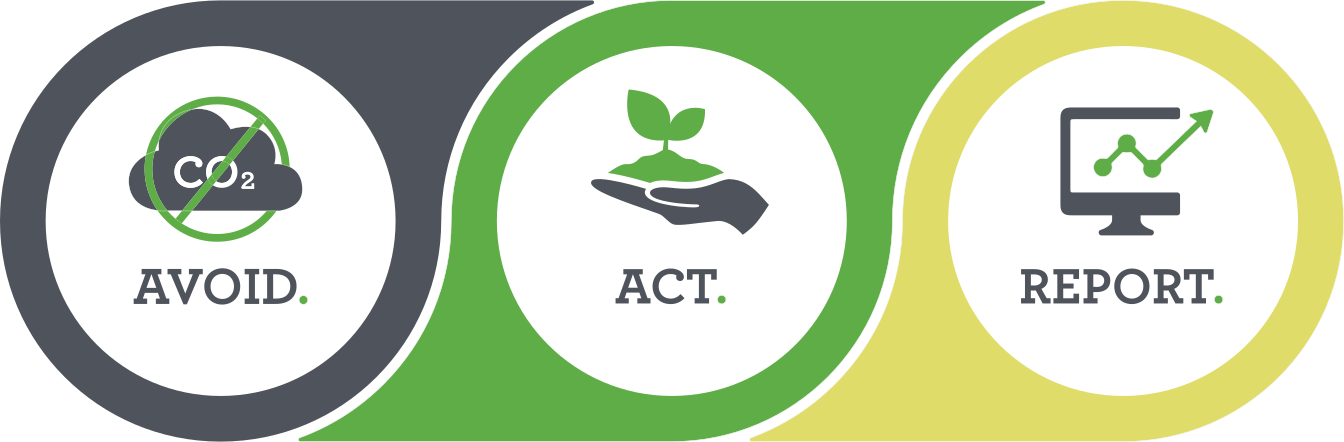
At Green Leaves Logistics, offsetting isn’t an optional extra – it’s built into every shipment. But we only offset once we’ve acted on avoidance and reduction first.
- We analyse – Using recognised frameworks such as the Greenhouse Gas Protocol (Scope 3, Categories 4 and 9), we measure logistics emissions and identify where they can be avoided or reduced.
- We take action – From digital shipping documentation to EV first and last mile UK deliveries, biofuel alternatives, and a supplier code of conduct that embeds environmental best practice.
- We offset what remains – By removing more CO₂ than each shipment emits, supporting verified renewable energy projects including energy from waste rice husks, and solar and wind generation.
- We provide transparency – Through our My GL platform, clients can view their emissions dashboard, run on-demand reports, and download carbon action statements to track progress.
Perfect sustainability doesn’t exist yet. Every business shipping goods will create some emissions. The question is whether you’re doing everything possible to avoid and reduce them before reaching for the offset solution.
Because the climate doesn’t respond to certificates – it responds to real reductions.
Want to understand your logistics emissions and explore genuine reduction opportunities? Contact our team to go beyond offsetting.